
Introduction: A Pivotal Era for Façade Engineering in Florida
Over the past decade, façade engineering in Florida has reached a defining era. Owners and architects increasingly pursue iconic, skyline-defining buildings featuring larger glass panels, slimmer profiles, and more expressive geometries than ever before. At the same time, façade engineers are tasked with reconciling these ambitions with the realities of the Florida Building Code (FBC), extreme wind environments, and constructability constraints.
At JB Design Façade Engineers, our work on high-profile residential and commercial towers throughout Florida has consistently reinforced a core truth: iconic architecture demands not just creativity, but disciplined engineering, early coordination, and innovative problem-solving. This case study outlines recurring façade engineering challenges encountered on complex Florida projects—and the strategies used to address them.
Owners Driving Architectural Innovation
Owners across Florida continue to push for differentiation in competitive urban markets such as Brickell and Downtown Miami. Requests for oversized glass panels, uninterrupted transparency, and signature crown features have become increasingly common. While visually compelling, these design choices introduce significant challenges related to wind pressures, panel deflection limits, fabrication feasibility, and installation tolerances.
Façade engineering in this environment requires balancing architectural ambition with performance. Systems that were effective a decade ago are often no longer sufficient. Engineers must continually re-evaluate assumptions around panel sizing, anchorage strategies, and load paths to ensure architectural intent can be realized without compromising safety, durability, or code compliance.
Translating Vision into Florida Building Code Compliance
Florida’s regulatory environment allows little margin for error. The Florida Building Code imposes strict requirements for wind resistance, impact performance, serviceability, and long-term durability—particularly in hurricane-prone regions. Compliance is further complicated by project-specific wind tunnel studies that frequently produce highly localized and demanding pressure criteria.
Façade engineers play a critical role in translating architectural concepts into systems capable of withstanding these forces. This work requires careful analysis of wind tunnel data, informed selection of glazing thicknesses and framing systems, and clear documentation demonstrating compliance. Early engagement is essential; late-stage involvement often leads to costly redesigns or compromises to the architectural vision.
Extreme Panel Sizes and the Envelope vs. Non-Envelope Strategy
One of the most persistent technical challenges in contemporary façade design is the increasing use of extreme panel sizes that exceed traditional envelope performance limits. In response, advanced modeling workflows enable a strategic distinction between envelope elements and non-envelope elements.
By clearly defining which components are responsible for weather, air, and water resistance versus those that are architectural or feature-driven, engineers can apply appropriate performance criteria to each. This approach allows oversized panels to remain part of the visual composition while ensuring the primary building envelope remains code-compliant and resilient under wind tunnel pressures. The result is greater architectural freedom without sacrificing safety or performance.
The Importance of Cross-Discipline Coordination
Modern façade engineering is inherently interdisciplinary. Successful outcomes depend on close coordination between architects, structural engineers of record, glazing contractors, steel fabricators, and specialty consultants. Façade systems increasingly rely on secondary steel, custom anchors, and integrated interfaces that cross traditional scope boundaries.
JB Design Façade Engineers frequently serves as the technical bridge among these disciplines—identifying conflicts early, aligning load assumptions, and clarifying responsibilities. This proactive coordination reduces field issues, minimizes schedule risk, and ensures façade systems are not only theoretically sound but also buildable within real-world constraints.
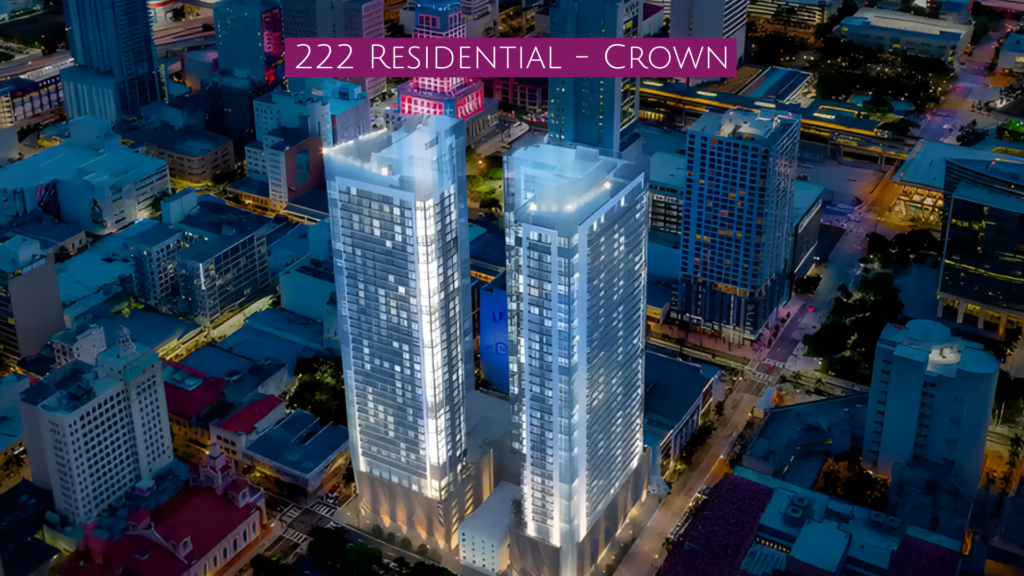
Project Spotlight: 222 Residential – Crown
At 222 Residential – Crown, the architectural vision centered on a visually striking façade crown and large-format glazing intended to elevate the building’s skyline presence. These features introduced high wind demands and tight deflection limits, particularly at upper elevations where occupant comfort and visual quality were critical.
Early façade engineering involvement allowed the team to rationalize panel sizes, align anchorage strategies with slab edges, and integrate crown features into a compliant façade system. The result was a design that achieved the owner’s vision while fully satisfying Florida Building Code requirements.
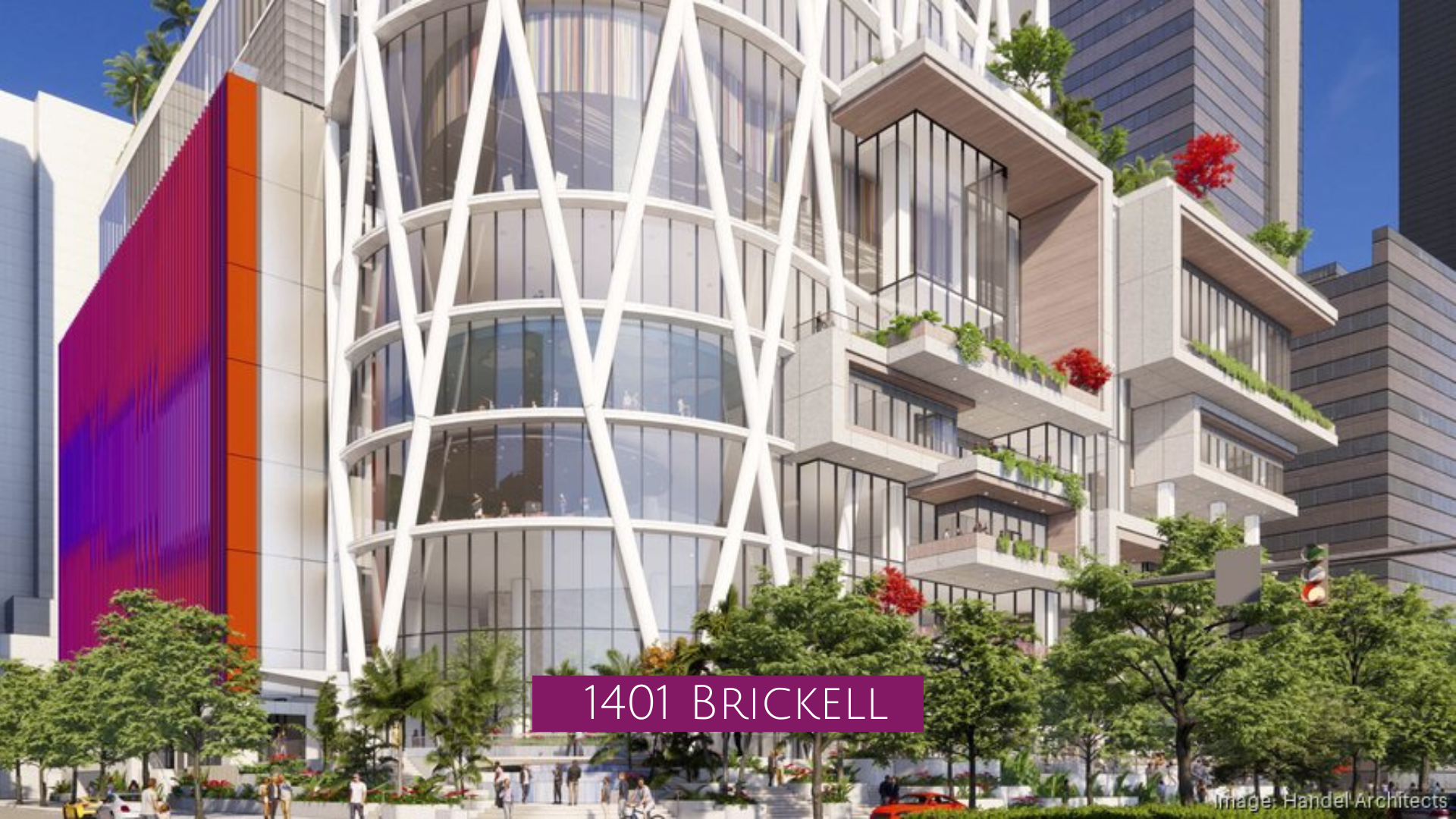
Project Spotlight: 1401 Brickell (Current Project)
At 1401 Brickell, façade challenges extend beyond glazing alone. As the design has evolved, the glazing contractor identified the need for additional structural steel to support portions of the façade system—steel requiring careful coordination with the primary structure designed by the engineer of record.
This ongoing collaboration requires precise alignment of load paths, connection concepts, and erection sequencing assumptions. A key component of the façade engineering strategy has been the deliberate separation of envelope and non-envelope elements, allowing architectural features to be supported independently while preserving the integrity and performance of the primary building envelope.
Through detailed coordination during design development, façade-supporting steel is being integrated into the overall structural system in a manner intended to minimize conflicts, reduce downstream constructability risk, and avoid costly field modifications during construction.
Key Lessons from Florida Façade Engineering Projects
Several consistent lessons emerge across our projects:
- Early façade engineering involvement is essential for iconic designs
- Florida wind conditions demand performance-driven design from the outset
- Separating envelope and non-envelope elements enables architectural innovation
- Successful façades depend on proactive, cross-discipline coordination
These principles remain critical for managing risk while delivering high-performance, visually compelling façades.
Conclusion: Engineering the Icons of Tomorrow
Iconic buildings are defined not only by their appearance, but by the rigor of the engineering behind them. As architectural ambition continues to push boundaries, façade engineers must respond with creativity grounded in code expertise, analytical precision, and collaborative leadership.
At JB Design Façade Engineers, our role is to transform ambitious architectural concepts into façades that are compliant, constructible, and built to endure Florida’s demanding environment. These projects reinforce a fundamental truth: great architecture and great engineering are not competing goals—they are inseparable.